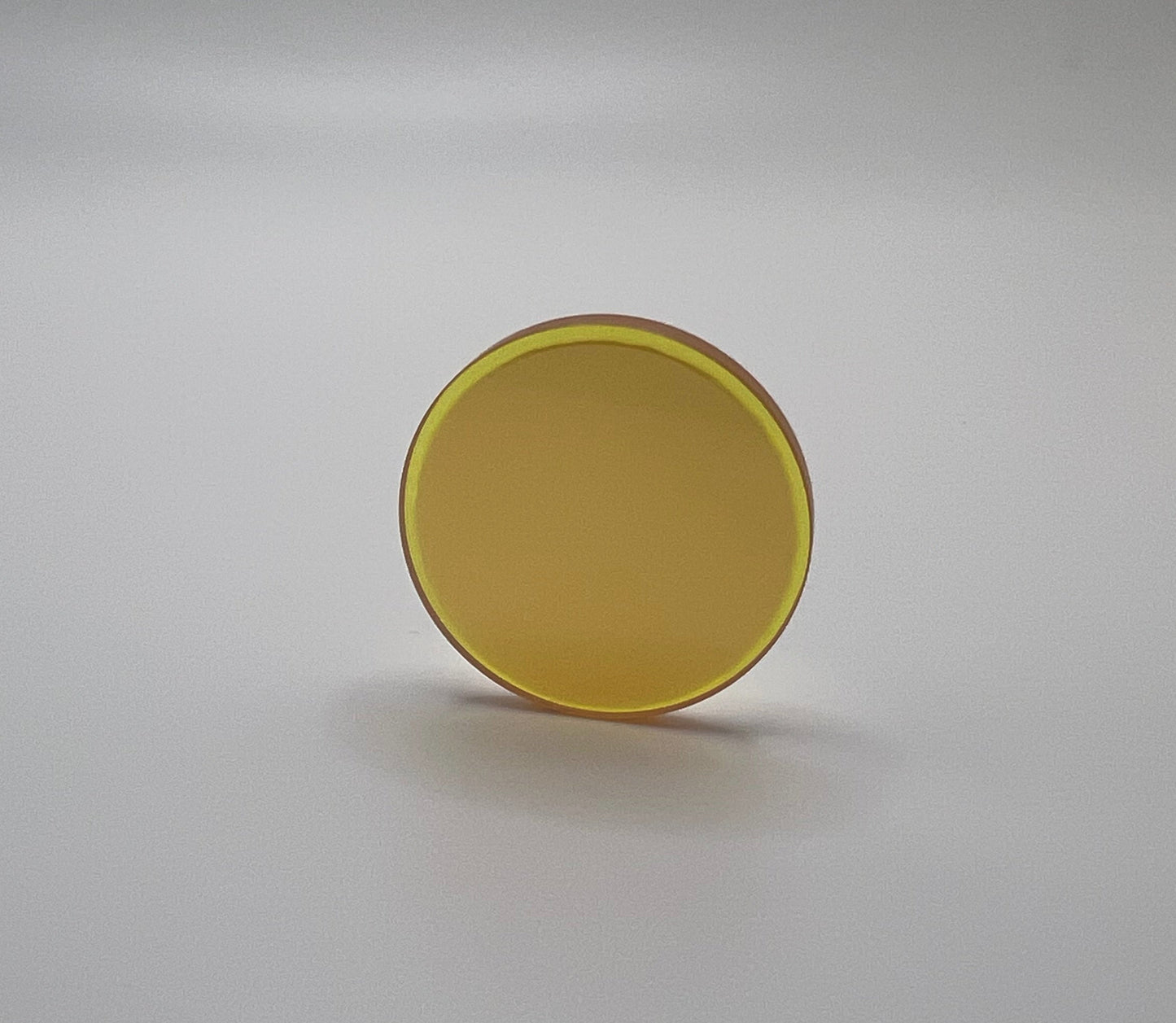
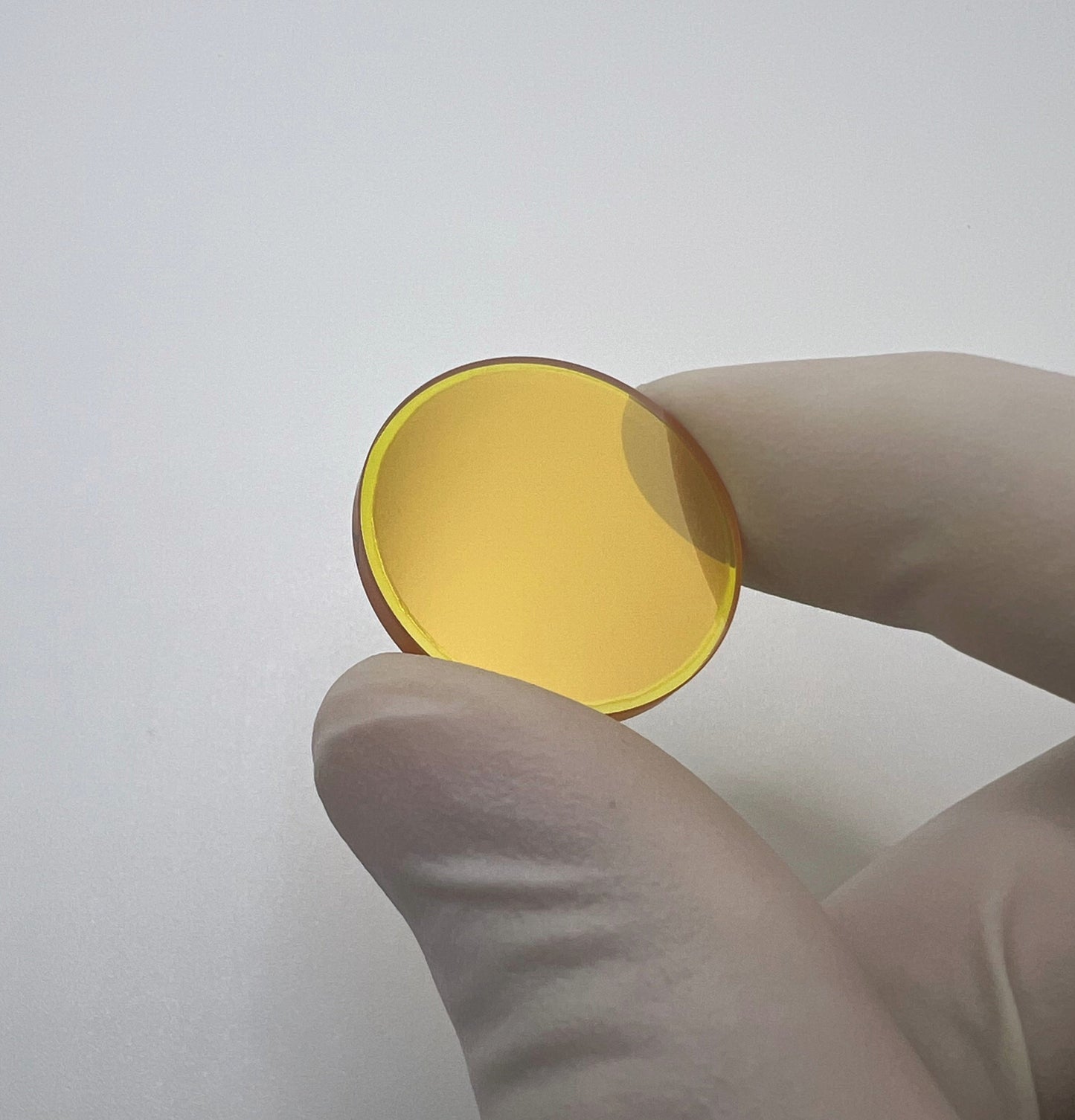
ZnSe Beam Splitter
10.6 µm | 97% Reflectance | 0° AOI
In stock
Couldn't load pickup availability
Description
A 97% Beam Splitter, or partial reflector, is typically being used as a cavity coupler, pickoff optic, or feedback mirror, where you want most of the optical power reflected while allowing a controlled fraction to transmit. Absorption and scatter is kept low to maintain the 97/3 ratio. An AR is applied to the back surface (R < 0.25%) and an optional wedge is available to help eliminate etalon effects and ghosting.
Technical Specifications
- Material: Laser Grade ZnSe
- Wavelength: 10.6µm
- Splitting Ratio: 97/3
- Angle of Incidence: 0°
- Back Surface: Anti-reflection coated
- Optional Wedge: 8 arcmin
Applications
This ZnSe 97% beam splitter is designed for CO2 laser systems operating at 10.6µm where high reflection with controlled transmission is required. This optic functions as a partial reflector, cavity coupler, pickoff optic, or feedback mirror, reflecting the majority of incident laser power while transmitting a small controlled percentage of the beam.Common applications include CO2 laser cavities, output coupling, beam sampling, power monitoring, feedback control, resonator alignment, and diagnostic setups where only a small fraction of the laser beam needs to be transmitted. The 97% reflective coating allows approximately 3% transmission at 10.6µm while maintaining low absorption and low scatter to preserve stable optical performance.
Wedge Angle and Ghost Reflection Reduction
In laser cavities and precision beam delivery systems, ghost reflections from parallel optical surfaces can create unintended secondary beams and interference artifacts. Introducing a small wedge angle helps spatially separate these reflections from the primary beam path, reducing feedback and improving system stability.
The optional wedged substrate configuration helps reduce ghost reflections and minimizes unwanted etalon effects that can interfere with sensitive optical setups. This can improve beam quality and reduce stray reflections in resonant cavities, beam diagnostic assemblies, and precision alignment systems. An AR is always applied to the back surface (R < 0.25%).

Technical Specifications
| Physical Specifications | |
|---|---|
| Material | Laser Grade Zinc Selenide (ZnSe) |
| Diameter Tolerance | +0.0 / -0.10 mm |
| Thickness Tolerance | ±0.10 mm |
| Flatness | λ/2 @ 632.8nm |
| Parallelism | < 1 arcmin |
| Surface Quality | 40-20 S-D |
| Edge Finish | Fine Ground |
| Spectral Specifications | |
| %T @ 10.6µm @ 0° | 3% ±1% |
| %R @ 10.6µm @ 0° | 97% ±1% |
Frequently Asked Questions (FAQ)
What is a 97% beam splitter used for?
A 97% beam splitter is commonly used as a partial reflector, output coupler, beam sampler, or feedback optic in CO2 laser systems. The optic reflects most of the incident laser power while transmitting a small controlled percentage of the beam for monitoring or diagnostic purposes.
What does the optional wedge do?
The optional 8 arcmin wedge helps separate unwanted secondary reflections from the primary beam path. This reduces ghost reflections and etalon effects that can occur with parallel optical surfaces.
What angle of incidence and polarization is this optic designed for?
This beam splitter is optimized for 0° angle of incidence (normal incidence) at 10.6µm. At normal incidence, polarization is irrelevant because S-polarized and P-polarized light exhibit identical optical behavior under these conditions.
What is the transmission of this beam splitter?
The optic is designed for approximately 3% transmission and 97% reflection at 10.6 µm.