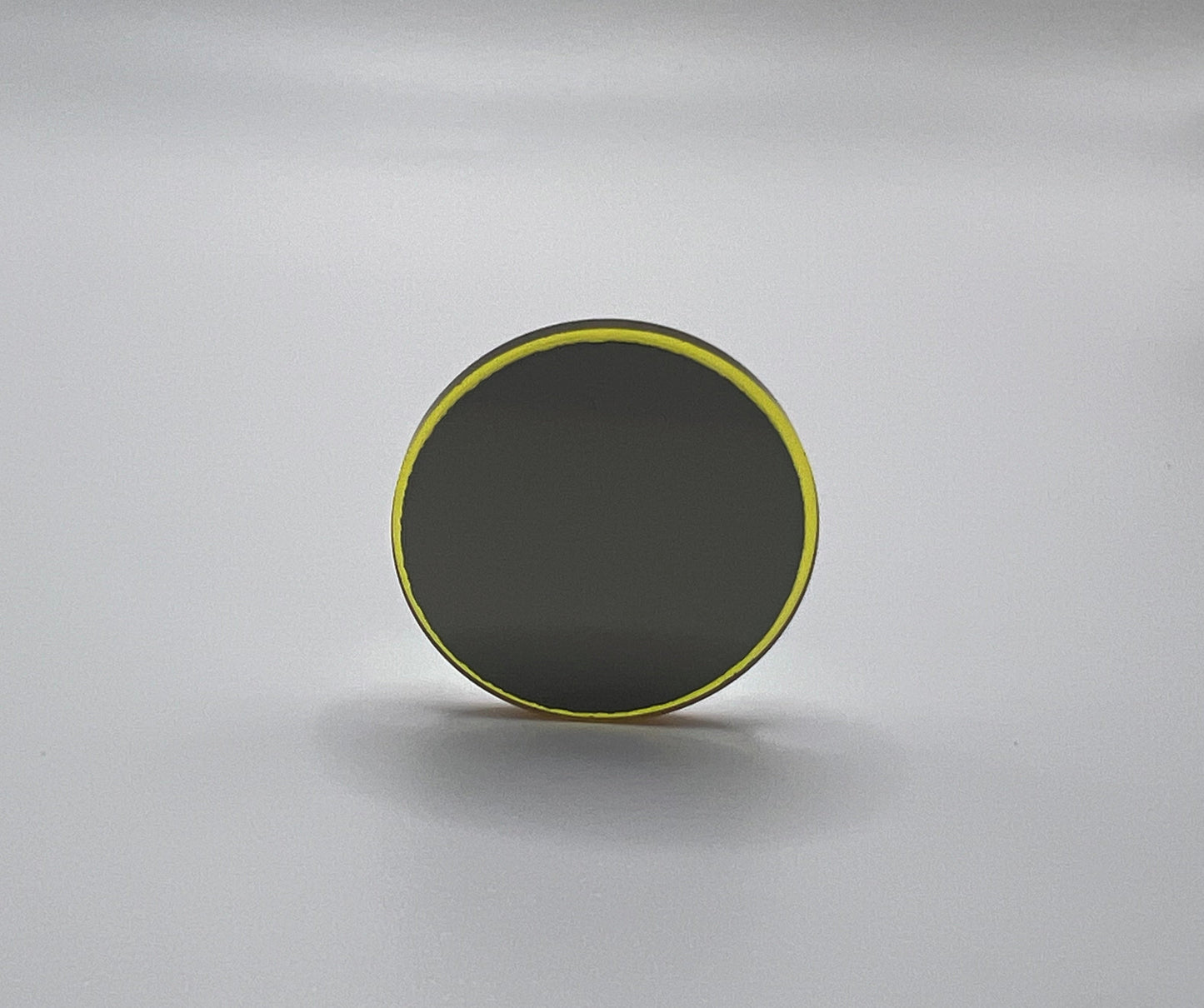
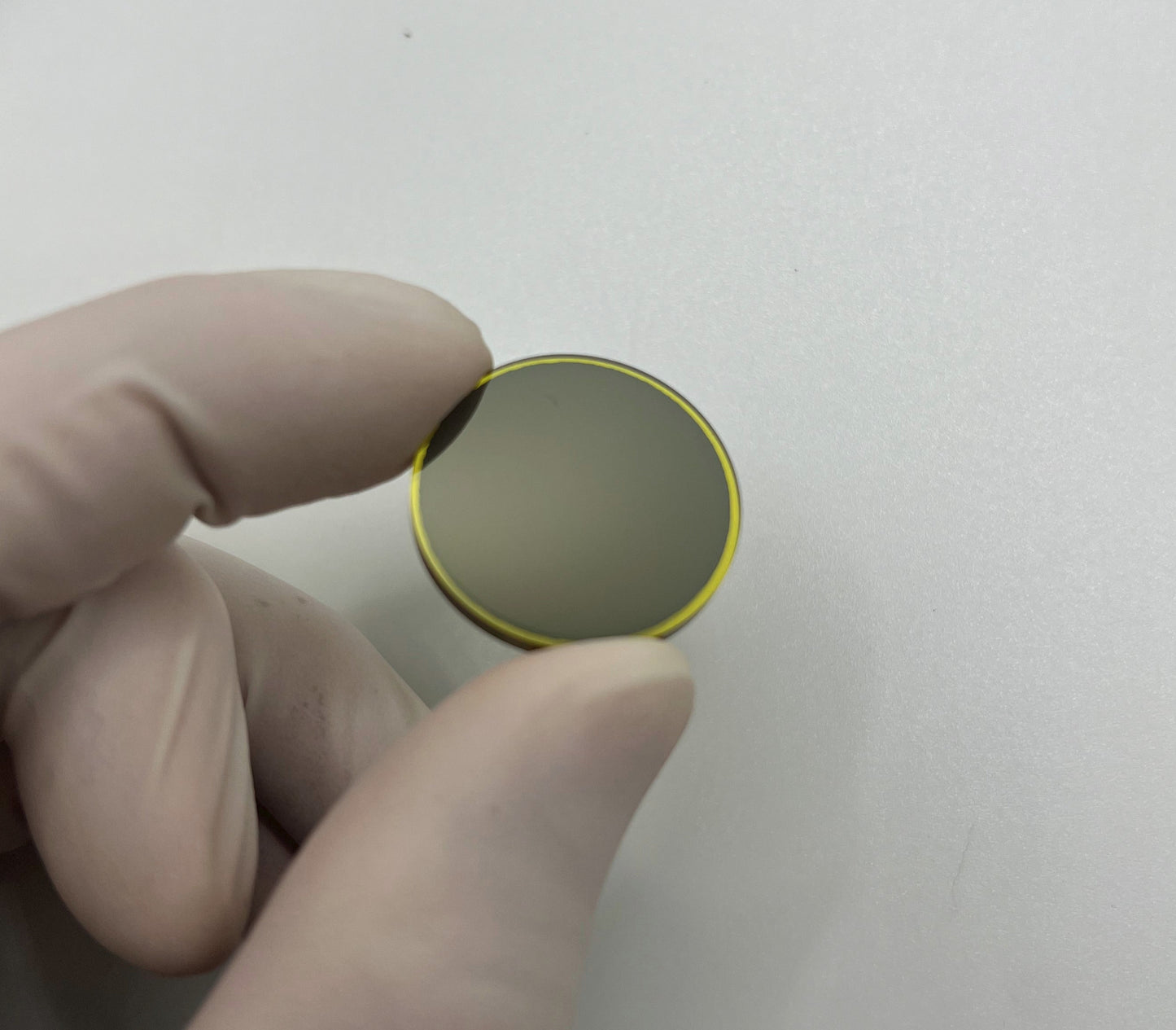
ZnSe Beam Splitter

Polarization Insensitive

10.6 µm | 50/50 Splitting Ratio | 45° AOI

Skip to product information
1 of 2
Wedged (8 arcmin)
Diameter
Thickness
Regular price $370.00
Regular price Sale price $370.00
Sale Sold out
Shipping calculated at checkout.

In stock

Technical Specifications

  • Material: Laser Grade ZnSe
  • Wavelength: 10.6µm
  • Splitting Ratio: 50/50
  • Angle of Incidence: 45°
  • Polarization: Polarization-insensitive
  • Back Surface: Anti-reflection coated
  • Optional Wedge: 8 arcmin

Description

This ZnSe 50/50 polarization-insensitive beam splitter is designed for use in CO2 laser systems operating at 10.6 µm where stable and consistent beam splitting performance is required. Partial reflectors are typically used inside laser cavities or outside the laser to split the beam. Generally, windows are used at 45° AOI outside the laser cavity and concave lenses are used at normal incidence inside the laser cavity. 

Applications

Common applications include laser power sampling, beam diagnostics, optical alignment, beam delivery systems, and output coupling configurations. The coating design provides nearly equal reflection and transmission behavior for both S and P polarization states at 45° angle of incidence, making the optic particularly useful in systems where polarization sensitivity can negatively impact measurement accuracy or optical performance.

These beam splitters are frequently used in industrial CO2 laser cutting and engraving systems, medical laser platforms, scientific instrumentation, spectroscopy systems, and research environments requiring reliable infrared beam management. The polarization-insensitive coating design is especially beneficial in systems utilizing circularly polarized light or where beam polarization may vary during operation.

Why Polarization Matters

Many conventional beam splitters exhibit significantly different reflection and transmission characteristics for S-polarized and P-polarized light at 45° angle of incidence. In practical laser systems, this polarization imbalance can introduce power measurement inaccuracies, unstable splitting ratios, inconsistent optical performance, and unwanted variations in downstream beam intensity.

A polarization-insensitive beam splitter is specifically designed to maintain nearly equal splitting behavior between S and P polarization states. This helps ensure more stable optical performance regardless of the incoming beam polarization condition. In CO2 laser systems utilizing circular polarization, mixed polarization states, or polarization-sensitive downstream optics, maintaining balanced splitting performance can be critical for system stability and repeatability.

Wedge Angle and Ghost Reflection Reduction

In laser cavities and precision beam delivery systems, ghost reflections from parallel optical surfaces can create unintended secondary beams and interference artifacts. Introducing a small wedge angle helps spatially separate these reflections from the primary beam path, reducing feedback and improving system stability.

The optional wedged substrate configuration helps reduce ghost reflections and minimizes unwanted etalon effects that can interfere with sensitive optical setups. This can improve beam quality and reduce stray reflections in resonant cavities, beam diagnostic assemblies, and precision alignment systems. An AR is always applied to the back surface (R < 0.25%).

View full details

Technical Specifications

Physical Specifications
Material Laser Grade Zinc Selenide (ZnSe)
Diameter Tolerance +0.0 / -0.10 mm
Thickness Tolerance ±0.10 mm
Flatness λ/2 @ 632.8nm
Parallelism < 1 arcmin
Surface Quality 40-20 S-D
Edge Finish Fine Ground
Spectral Specifications
%T @ 10.6µm (S-Pol & P-Pol) 50% ±4%
%R @ 10.6µm (S-Pol & P-Pol) 50% ±4%
Measured transmission and reflection performance for ZnSe 50/50 polarization-insensitive beam splitter at 10.6 µm and 45° AOI.

Frequently Asked Questions (FAQ)

What is a polarization-insensitive beam splitter?


A polarization-insensitive beam splitter is designed to maintain nearly equal reflection and transmission behavior for both S-polarized and P-polarized light. This helps improve beam stability and measurement consistency in CO2 laser systems operating at 45° angle of incidence.

Why are wedged beam splitters used?


Wedged beam splitters help reduce ghost reflections and minimize unwanted etalon effects caused by parallel optical surfaces. This can improve beam quality and reduce interference artifacts in sensitive laser systems.

Why is ZnSe commonly used for CO2 laser beam splitters?


ZnSe offers excellent transmission at 10.6 µm, low absorption, and strong resistance to thermal shock, making it one of the most widely used infrared optical materials for CO2 laser applications.

What angle of incidence is this beam splitter designed for?


This beam splitter is optimized for 45° angle of incidence at 10.6µm.